



Insights
2025.12.10
Our XPS Instrument Used in a Study Published in Nature
A research group at Stanford University led by Prof. Y. Cui and S.F. Bent has developed a Cryo-XPS method to observe the solid-electrolyte interphase (SEI) in lithium ion batteries in its pristine, as-formed state. This groundbreaking work was published in Nature (October 2025 issue). Our XPS, the PHI VersaProbe III, was used in this study.
Background
XPS is widely used for evaluating the chemical states of the SEI; however, under room-temperature and ultrahigh-vacuum conditions, the SEI can undergo reactions, volatilization, and degradation, meaning that conventional XPS may not be able to evaluate the “true” SEI in its pristine state. In this study, they successfully achieved the direct observation of complex SEI structures in their as-formed, pristine state by using Cryo-XPS with our XPS.
Key Achievements and Their Significance
By enabling more reliable quantitative evaluation of the true abundances of SEI components and more accurate determination of SEI thickness than ever before, this study represents a breakthrough that reshapes the global standard for SEI analysis and calls for a redefinition of XPS-based interpretations of the SEI, while simultaneously demonstrating the performance and reliability of our XPS through its publication in Nature.
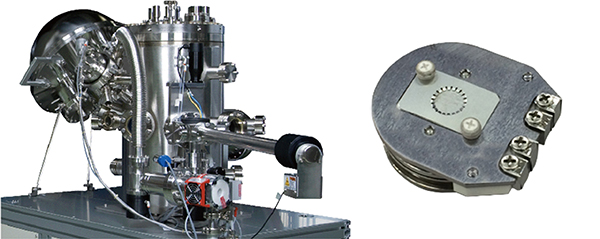
PHI VersaProbe III with Cryogenic Sample Holder for Cryo-XPS.
Title: Cryogenic X-ray Photoelectron Spectroscopy for Battery Interfaces
Journal: Nature, Vol. 646, pp. 850–855 (2025)
DOI: 10.1038/s41586-025-09618-3